My work is grounded in a simple belief: well-designed structures can dramatically improve how people collaborate – and with that, unleash the level of energy, purpose, and joy they experience at work.
As a researcher and trainer, I work directly with teams and organisations – in longer-term collaborations, through workshops, or as a visiting facilitator.
By creating spaces where professionals can share their experiences and work with their different perspective -on roles, relationships, and ways forward- I support teams in navigating complex challenges together. Drawing on their collective resources, they learn to unlock ideas and solutions they wouldn’t reach on their own.
The approach I take documents challenges people face as well as strategies that help them reconnect with their own resourcefulness. The emerging rich library of concrete examples deepens the work – for me, and for the teams I support. It also anchors my understanding in relevant real-life contexts.
My background is in cognitive neuroscience. Since 2025, I joined Wageningen University and the AMS Institute for Advanced Metropolitan Solutions as a postdoctoral researcher, where I explore the personal challenges of professionals seeking to accelerate innovation in the construction sector.
Alongside this, I work as a freelance trainer, supporting scientists (via hfp-consulting) and other professionals to strengthen how they communicate, collaborate and take action in complex work environments (see my portfolio – coming soon).
My work and curiosity for social learning are sustained by a wonderful web of people – among them the enactive research group, with whom I meet regularly to reflect, exchange and learn together, as well as networks of research-and-practice focused on collective creativity, embodied learning and the important role of mediators of innovation.
In Sanskrit, my name means constant change (Anicca) and fearless force (Anika) – I resonate very well with both.
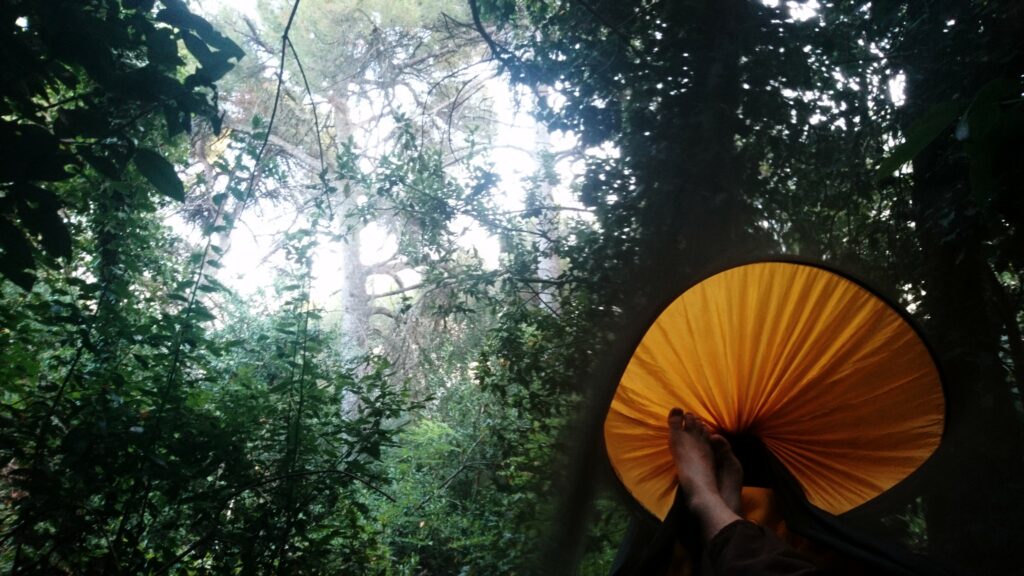
In my life, I move a lot – cycling, climbing, dancing, exploring. I’m drawn to the outdoors, into adventure, and to building things: from mornings by the water to weeks spent cycling across Europe with a hammock, to crafting the spaces I call home.
If all goes well, my next step is a small, beautiful house in south-west France.
I love lying on the floor, entering cold water, and getting in touch with people.
I am grateful for my current roles at WUR / ELS and the AMS Institute – they continue to challenge and support me in growing as an independent, yet deeply situated, researcher and trainer.
This website is a window into my work: it provides recent ideas and activities, core principles, fragments from my notes, and glimpses of the projects and collaborations that shape it.
Take your time exploring.